Though we’re never just one element at any time, its common for us to be closer to one more than the others. The element you associate with may share traits, both positive and negative, with you. Knowing your element can help you understand yourself and help you overcome problems that you encounter because of it.
Note that the element that you associate with now may change with time and personal growth.
So, how does one find their element? Well, first you gotta know the elements. Each one has its own set of traits.
Now, I won’t be listing all of the correspondence for each element, just the ones I think may be relevant to the topic.
Possible Fears: Burning alive, losing loved ones, being alone.
When looking at one’s own traits and flaws it’s important to be honest with yourself and open to your intuition. If you find you can’t decide between two or more elements ask around, see what others think you are. It might help you narrow it down.
Thank you for reading! Feel free to ask any questions or to leave any suggestions.
Air one
If you don’t believe in astrology we can’t date sorry
A shapeshifter typically refers to a person who puts on the body of an animal, although it can sometimes be a human, through magic. The term can also technically refer to animals who turn into humans, such as the Irish selkie and the Japanese kitsune, although we’ll only be discussing human transformation here. Warning: Really fucking long post ahead.
[Image description: German woodcut of a werewolf, half transformed.] [Image Source]
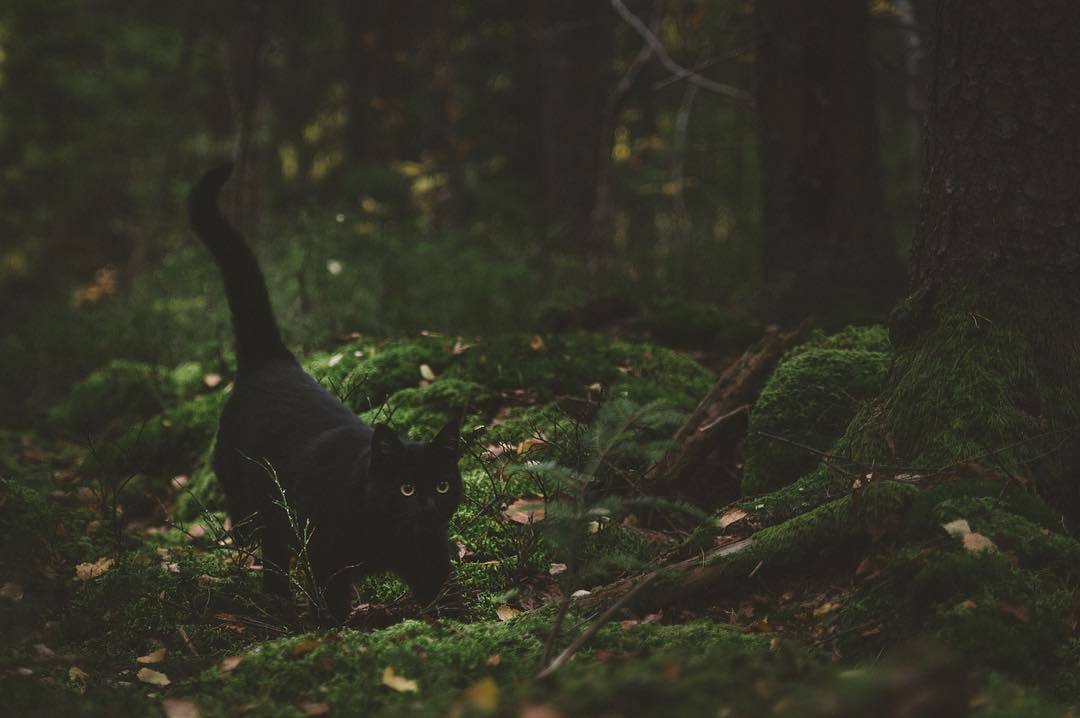
Witches were often said to transform into cats or hares, but mice, deer and even birds such as ravens or owls were also common. One telltale sign that the animal was a transformed witch was that it would be entirely black or entirely white, as in this tale about a witch called Auntie Greenleaf. Other witches were also said to be able to recognise witches in disguise.
Cats would be chosen because they were a common household animal that would not arouse suspicion. Hares, more so in Britain than in the New World, are associated with witchcraft due to the fact that hares jump and box during mating season, which is said to resemble a coven of witches dancing at a sabbat.
Advantages:
Connecting with nature on a deeper level
Travelling to places you might not otherwise be able to go to
Gaining a better understanding of the animal you shift into
Gaining a new perspective on a problem
Temporarily adopting or building up over time certain qualities associated with a particular animal
It is important to note that in most shapeshifting rituals, an item connected with the animal that the witch wants to shapeshift into is required, such as an animal pelt or feather. For example, folkloric werewolf transformations often involve wearing either a wolf pelt or a 7-tongued belt made of wolf skin, and sometimes also include a salve of wolf fat infused with (most likely trance-inducing) herbs.
If you want a piece of an animal for a shapeshifting ritual, please check the laws in your area first! The ownership of animal parts of many predators, such as wolves and coyotes, and feathers of many kinds of birds, is restricted. Check that these things are legal to own in your area, and if you’re buying, make sure the seller is also acting legally and humanely in their collection of animal parts.
Methods of shapeshifting: familiars
Okay so this is kind of cheating, but one way witches were said to shapeshift was to take advantage of the close bond between themselves and their familiar. The witch would go into a trance state send out their soul (think of it like astral projection) in spirit flight, and lay their consciousness over that of their familiar’s, and possess it. They would then be able to sense everything the animal was sensing, as well as control its movement.
This practice, also known as ‘borrowing’ after Terry Pratchett’s Discworld novels, is described in further detail here.
Methods of shapeshifting: the witch’s fetch
Shapeshifting using the witch’s fetch is a slightly more complex idea that is linked to the ideas of ‘the sidereal body’ and is also kind of comparable with the practice of astral projection.
The ‘sidereal body’ is an idea taken from Eliphas Levi’s ‘Transcendental Magic’, otherwise known as part one of ‘Dogme et Ritual de la Haute Magie’. He also refers to it as the ‘animal soul’ of a person, and the ‘intermediary between the soul and the physical envelope’. Think of the ‘sidereal body’ as a part of your soul that you can project ethereally into the world around you, kind of like an aura. This ‘sidereal body’, this part of your soul, can also detach from your body in sleep and in trance states. In its detached state, the ‘sidereal body’ can be referred to as the witch’s ‘fetch’, or ‘fetch-beast’. Here is a post on a possible ritual for practising raising the fetch.
With the aid of an animal talisman to act as a focus, the witch can mould their sidereal or astral body in two different ways in order to shapeshift:
They can choose not to separate it from the real body, but instead mould it into a kind of magical cloak around themselves, into the shape of the animal they wish to shapeshift into.
Or they can choose to project the sidereal body outwards, and mould the ‘fetch’ into the shape of the animal they wish to shapeshift into. This projection, much like an astral projection, can manifest in the physical realm much like a ghost does.
An example of the witch’s fetch in folklore are the tales in which a witch falls asleep or into a trance state and an observer sees an animal, their fetch-beast, crawl out of their mouth, often a mouse or toad.
Methods of shapeshifting: rituals and charms
In ‘Call of the Horned Piper’, Nigel Jackson gives an example of how a ritual transformation may have been performed. The initiate would undergo a symbolic death, undressing and crossing a lake or a river to symbolise passing to the other side. They would then put on the wolf skin or belt, and perhaps apply a wolf fat salve. In an altered state of consciousness, the initiate’s soul would then ‘be projected forth in the form of a wolf’.
Another means of transformation would be a charm, most famously that recited by Scottish witch Isobel Gowdie. She would say the transformation charm below three times to turn into an animal:
“I sall gae intil a haire,
Wi’ sorrow and sych and meikle care;
And I sall gae in the Devillis name,
Ay quill I come home again.”
And to change back, she would say (once):
“Haire, haire, God send thee caire,
I am in a hairis likness just now,
Bot I sall be in a womanis likenes evin now.”
Less well known are the other charms that Gowdie provided for shapeshifting into a cat and a crow:
“I sall gae intil a catt,
Wi’ sorrow and sych and a black shat;
And I shall gae in the Devillis name,
Ay quill I com hom again.”
“I sall gae intil a craw,
Wi’ sory and sych and a black thraw;
And I shall gae in the Devillis name,
Ay quill I com hom again.”
Isobel Gowdie’s charm was incorporated into a longer charm known as a fath-fith, which stems from ‘deer form’, and was used by hunters, warriors and travellers for stealth.
An example of a possible shapeshifting ritual you can try can be found here. Lizzie of visardistofelphame also writes on how you could create a ritual mask for shapeshifting here.
Warning:
Shapeshifting was often seen as dangerous for the witch: if the possessed animal or projection was harmed, typically by fire or silver, then this damage would be reflected on the body of the witch. For example, if someone kicked the leg of a shapeshifted cat, the witch would have a corresponding leg injury.
Other dangers include not being able to return to your body because you’ve forgotten you were human, have got lost, or travelled too far from your real body. You could also be captured or injured by malevolent spirits while travelling.
This post is already ridiculously long, so sources are under the cut (sorry mobile users)
I don’t usually soap-box, but I’m going to for a hot sec since this has been on my mind:
Cults are getting better branding, prettier leaders, hipper-sounding cosmologies, and wider reaches due to social media. They’re not all deity-focused. Thoughtful, intelligent people can get sucked into them. Just…stay safe out there, guys. Do your research, look at all your options, and trust your gut, not your guru.
I’m glad this is resonating with people.
I do want to emphasize, again, that cults (and toxic groups with cult-like attributes, I’m using this term pretty loosely) don’t usually look like what you’d expect. A lot of toxic and dangerous religious movements are tiny and you won’t find much about them via Google. Cultish non-religious movements are the same way.
Start-ups, multi-level marketing companies, activist groups, fan groups, political groups, and internet gurus who run retreats can all be cult-like and dangerous. Tune your BS detector, ask family, friends, and experts for advice.
Here are some warning signs:
Pressure – pressure to make quick decisions, to give (or pledge) considerable amounts of money, to move in with a group, to abandon family or cut off friends. Elevated Leaders – anyone claiming special insight, special powers, or that they aren’t human. Demanding special treatment (compared to other followers). Misuse of funds or money collecting at the top. physical, emotional, and/or sexual abuse. Lack of accountability or oversight. Isolation – encouraging (or requiring) members to cut off family relationships, friendships with those outside of the group, leaving jobs, moving to isolated areas, taking away communication methods. Strong “us-vs-them” mentality. Vilification of ex-members. Love-bombing. Altered states of consciousness – long work hours, sleep deprivation, lack of access to adequate food or water. Otherwise unproblematic activities like meditation/prayer/chanting, but done for hours. Discouraging doubt – discouraging or punishing doubt and critical thinking.







 fair--y backup
