I could not find a specific page for this, but Ylang Ylang is usually associated with calming, employment, love, magickal ability, and anti-negativity. (source)
Listed below are dangerous herbs and herbal combination and explanations as to why they are dangerous. Do not try any of these herbs, orally, on the skin, or in any other way ever (or during pregnancy or nursing, if listed as such).
*Some of the herbs mentioned are safe in small doses are are written as such. Other herbs are toxic in small doses or any amount. This is not a complete list.
Belladonna– Nightshade, bittersweet nightshade is an extremely poisonous herb and is absolutely deadly. It is related to Henbane. Side effects can include dry mouth, enlarged pupils, blurred vision, red dry skin, fever, fast heartbeat, inability to urinate or sweat, hallucinations, spasms, mental problems, convulsions, and coma.
Blue Cohosh – Can cause miscarriages, especially during early pregnancy. This herbs in combination with other herbs has been used as an aborfacient. It works by loosening and relaxing the uterine muscles. This is why it is often suggested as a remedy for pms and menopause.
Black Cohosh –
Can cause miscarriages, especially during early pregnancy. This herbs in combination with other herbs has been used as an aborfacient. It works by loosening and relaxing the uterine muscles. This is why it is often suggested as a remedy for pms and menopause.
Chaparral – This herb can cause serious liver damage, liver failure, and acute hepatitis.
Comfrey – Comfrey can be taken in small doses for upset stomach and pms, but using a lot is dangerous. Comfrey contains pyrrolizidine alkaloids, a type of poison that causes liver and kidney failure as well as cancer. They can be absorbed through the skin as well.
The amount of PAs found in comfrey changes according to the time of harvesting and the age of the plant. The roots have 10 times higher amounts of PAs than the leaves.
Devil’s Claw –
Harpagophytum, means “hook plant” in Greek. Devil’s claw causes additive effects in many medications. It can cause changes in blood pressure as well.
Eucalyptus – Eucalyptus can not be consumed. Taking 3.5 mL of undiluted oil can be fatal.Even applying too much to the skin and absorbing large amounts is dangerous. (Use it very lightly, dilute it, or use a humidifier.) Signs of eucalyptus poisoning might include stomach pain and burning, dizziness, muscle weakness, small eye pupils, feelings of suffocation, and some others. Eucalyptus changes how many medicines break down in the liver.
Foxglove – Poisoning by this herb can cause stomach upset, small eye pupils, blurred vision, strong slow pulse, nausea, vomiting, dizziness, excessive urination, fatigue, muscle weakness and tremors, stupor, confusion, convulsions, abnormal heartbeats, and death. Long-term use of foxglove can lead to symptoms of toxicity, including visual halos, yellow-green vision, and stomach upset.
Golden Seal – This herb is a uterotonic; brain damage (kernicterus) has developed in newborn infants exposed to goldenseal. Do not use goldenseal during pregnancy or breast-feeding.
Hemlock –
Neuromuscular
blockage can occur to the point of
death if it blocks the
respiratory muscles.
Henbane – Side effects include dry mouth, red skin, constipation, overheating, reduced sweating, vision disturbances, increased heart rate, urination problems, drowsiness, restlessness, hallucinations, delirium, manic episodes, and death. Henbane is poisonous and not safe for self-medication.
Kava – In the South Pacific, kava is a popular social drink, similar to alcohol in Western societies. It is used by some to treat anxiety, restlessness, and insomnia, but like many medicines used to treat these types of issues, Kava runs the risk of being too much of a ‘downer – oversedation.’ It can make you unable to operate machinery, fatigued, and worsen depression. Large doses can also effect the liver and cause yellowing of the eyes. Also, some of the dangerous chemicals in kava can pass into breast milk and might hurt a breast-fed infant. Avoid this herb if you have Parkinson’s disease or if you will undergo or have recently undergone anaesthesia as it effects the central nervous system.
Alcohol, sedatives, and benzodiazepines interact with downers.
Licorice Root – This tasty herb, when taken in high doses, may cause tiredness, absence of a menstrual period in women, headache, water and sodium retention, and decreased sexual interest and function in men. It may also cause early delivery in pregnant women and miscarriage in early pregnancy. This root has also been seen effecting hormone levels in the body and interacts with oestrogen. It also seems to rid the body or potassium. It can also cause heart failure.
Mistletoe (European) – Can cause chills vomiting, diarrhea, cramping, and other side effects. Short-term, frequent use of European mistletoe might cause liver damage. Lowers blood pressure.
Mugwort – This herb is dangerous in large quantities. Thujone, a ketone and a monoterpene that occurs naturally in two diastereomeric forms:-α-thujone and-β-thujone is present in wormwood Thujones cause a slight high and a feeling of relaxation, which is why it is enjoyed by smokers and drinkers (as a tincture or bitters), can also cause breakdown of muscle, nightmares, seizures, dizziness, confusion, numbness of arms and legs, paralysis, and death. The chemical is also said to be responsible for absinthe’s hallucinogenic effects.
Mugwort might cause a miscarriage because it can start menstruation and also cause the uterus to contract.
Pennyroyal – Pennyroyal has been used as an antificant and can also kill pregnant mothers. Do not use this herb as a method for miscarriage. It can cause irreversible damage to the liver and kidneys, nervous system, brain, and cam cause dizziness, confusion, seizures, and death.
Peony – Peony can cause uterine contractions and is unsafe to use during pregnancy. It also slows blood clotting.
St. John’s Wort – This herb interacts with SSRIs and other types of medications for the treatment of depression. In bipolar, bipolar depression, mania, manic depression, and other related disorders, St. John’s wort can trigger a major upswing or manic episode in patients. This herb also interacts with birth control.
Wormwood – Wormwood one of the main ingredients in the alcoholic beverage, Absinthe. The latin Absinthium comes from the ancient greek word apsínthion, which some claim translates to “Undrinkable”, referencing the herb’s extreme bitter flavor. It is closely related to mugwort, which is toxic in large doses, but wormwood is even more so. The herbs also contained thujones. See Mugwort.
Valerian – This herb, especially the root, can cause oversedation.
Alcohol, sedatives, and benzodiazepines interact with downers.
Valerian can cause some side effects such as headache, excitability, uneasiness, and even insomnia in some people. A few people feel sluggish in the morning after taking valerian, especially at higher doses. It’s best not to drive or operate dangerous machinery after taking valerian.
Wintergreen – This type of mint can be dangerous in high doses. Taking wintergreen oil or large amounts of wintergreen leaf can cause ringing in the ears, nausea, vomiting, diarrhoea, headache, stomach pain, and confusion.
This is a really good, comprehensive list of edible flowers. It has a vivid description each plant’s taste and how to use and harvest as well as including which parts of the plant are inedible (x)
Here’s a great free ebook on cooking, brewing and blending herbs (x)
This website has fantastic gardening advice. Just search for a plant and it will tell you how to grow it, what grows indoors, pest, solutions, trivia and much, much more. (x) And it even has an edible gardening section (x) plus an indoor section if you don’t have a garden (x)
If you have any other resources, feel free to add them to this list.
So maybe you’re a college witch with limited space and money, limited to the one window in your dorm. Or, maybe you’re a witch without extensive backyard space who wants to start up a magical garden. Perhaps you’re a kitchen witch who wants the freshest herbs right at her fingertips.
For many witches, having a garden seems to be a bit of a no-brainer. After all, plants and magic go hand-in-hand. Plus, when thinking of a witch, it’s hard not to think of a cottage in the woods with a little vegetable garden out front. Unfortunately for the majority of us, our cottage in the woods is a tiny flat, and our garden out front is a windowsill with limited space.
This is when it comes time to embrace your craftiness and bring your garden indoors! Not only does it place your garden in a convenient location, it also allows you to freshen the air, recycle what would otherwise harm the earth, and embrace your witchy green thumb!
Eggshells for the Garden Witch
The kitchen witch has eggshells piling up on the counter, dried and ready to be ground up for use in protection powders. The garden witch looks at these shells and thinks, “Oh! Fertilizer!”
But if you’re limited in space and have to keep your garden limited to your windowsill, you may find yourself looking at those eggshells and saying “Oh! New pottery!” Not only is creating an eggshell planter a very green practice, but it’s also creative and makes transplanting much easier if you end up having a larger garden later on!
The Container…
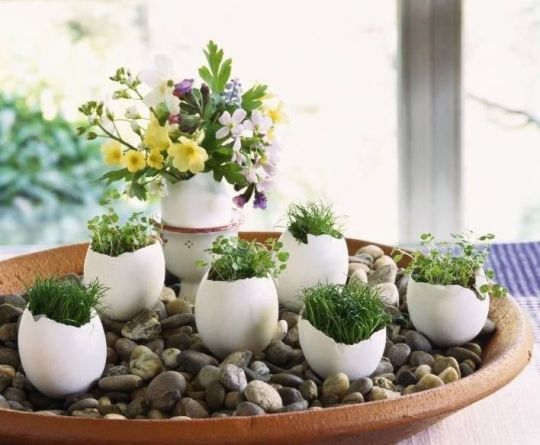
Simple enough, you just need mostly intact eggshells. In the picture above, the eggshells are kept in the carton, but I’ve seen eggshells set up decoratively, such as with this picture:
The core of this post is clearly the eggshells, but you can arrange them in whatever way saves space or is aesthetically pleasing!
Carefully fill the emptied eggshell with potting soil. Make an indent in the soil with your finger, and carefully add your seedling before adding a final layer of soil and watering. If you plan on keeping the plants in the eggshells instead of transplanting, you could also carefully poke holes in the bottom of the eggshells so that your plants don’t get over-watered.
How Can I Witch This?
Eggshells alone are extremely protective, and providing your plants with that energy is beneficial. Around Ostara, use died eggshells! Not only will the shells have protective energy, but you’ll be able to use color correspondences and whatever symbols you used for the rite.
Draw symbols or runes of growth, protection, and strength on the shells in order to encourage your plant’s growth!
Bonus points is if you grow protective herbs in the eggshells!
May your harvests always be fruitful! Blessed Be! )O(


 fair--y backup