The underlying logic of most traditional witchcraft is animism. Animism in the sense that the physical components of witchcraft have spiritual agency and intention that the witch is able to cajole one way or another to their purpose. And furthermore, the power and agency of any target is taken to account as potentially having innate or obtained protections that could backfire should the spell be wrong somehow. Whereas much of modern witchcraft is not animist, and the only figure with agency are the humans involved: the witch and their target–a target whose will is assumed so weak that it must be protected by maxims.
These stark differences dog much of the interwitch discourse. The opposite world views are chocked up as elitism by the modern witches against the traditional. And traditional witches dodge the insult that they are still in training wheels for using tools and components. The modern witches say my greatest witch tool is my mind whereas a traditional witch may say a tool is a useful constructed object (usually manmade but a few animals make tools too). Or the idea that magic does not work without taking major mundane actions to further them. That requirement coming from there being less effort taken in the spell itself and perhaps no assistance petitioned from the spirits of the materials employed so much the effort is taken non mystically. Most modern witches say spell components are mere props. Whereas traditional witches often befriend their spell components.
I will never say modern witchcraft doesn’t work. It follows its own logic premised on inspiration. Verily inspiration is quite powerful and I won’t knock it. And the logic of inspiration carried out is acting in accord which is very effective combined with the tools of theatrics based off of personal correspondences. It may even be possible to reconcile the two.
Many traditional witches in addition to their animistic approach also follow through with acting in accord which doesn’t have to hurt, but can limit the possibilities noticed for the result or can alternately pave the way to allow the animistic powers to flow more productively.
Additionally, traditional witches can find ways to work without tools and materials after learning to contact the spirits of those materials indirectly without the presences of the objects for immediate relating. Witches can use the animist power of words or strengthen their ability to harness fate to be able to do it with energy or psychic ability. But certainly it’s not only their own intent carried out, but a cooperation or dictation of the other powers that be to that end.
So basically, there is more than one system. I use the terms modern and traditional merely as stand in identifiers. Of course there are those that identify with one or the other but have differing metaphysical practices than I used for demonstration purposes.
“The northern tradition views bodily powers as consisting of two separate but linked qualities: might and main. Might (Old English meaht; Old Norse máttr) is the physical strength of the body, the energy within it that enables it to live, powering its movements and actions. Main (Old English mægen; Old Norse megin) is the inner psychological strength that empowers the personality; it is transferable to other people and to objects. In Old Norse tradition, megin (main) is described in terms of who or what possesses it. The earth has jarðar megin; the gods possess ásmegin. When a magician empowers something with megin, it becomes aukinn, ‘augmented.’ A god or person with his or her own megin can also be aukinn with megin from elsewhere. The god Heimdall, for example, possessed ásmegin but was also aukinn with jarðar megin. Anything to be made aukinn must have an empowerment that aligns with the object or person’s innate qualities. If something is empowered contrary to its nature, it still works magically, but there is an inner conflict, as the empowerment is álag, an ‘on-lay’.
Without main, might is useless, for main includes the will to live. It is main that enables a person to exert his or her will in all realms of life. It empowers the magical arts of the human being. We must have both might and main in order to live effectively. Without one or the other, we are close to death. Inner power corresponds with outer powers, by means of being in the right place at the right time to achieve what is needful.”
–Nigel Pennick, Pagan Magic of the Northern Tradition, 2015, pp. 28-29.
Having knowledge of herbs and plants (either magically or medicinally) during the Middle Ages, often was reason enough to accuse a woman of being a “witch,” so there is no doubt some of the country folk at the time took these herbal folk names literal. Chances are, these names were used merely as descriptors to help remember them easier. Most plants were given
names descriptive of their uses and others were given names for something they
generally resembled. Spells written by witches in ancient times were often written with such descriptors, which personally i believe to be a form of secret coding.
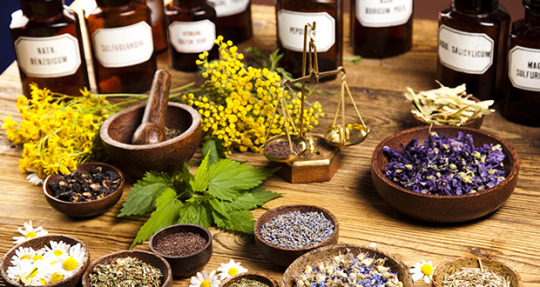
Here is a small list of “witchy” herb names (most of these are already floating around the community) that you can use in your craft when you create your spells. This list could be a great addition to any Grimoire and i hope you find them as useful as i do.
Bad Man’s/Devil’s Oatmeal/Porridge – hemlock
Bad Man’s/Devil’s Plaything – Yarrow
Bastard – false Dittany
Bat flower – tacca
Bat’s Wing – Holly leaf
Bat’s Wool – moss (which moss?)
Bear’s Foot – Lady’s Mantle
Bear’s Grape Bearberry Arctostaphylos uva-ursi
Bear Paw – ramsons Allium ursinum or the root of male fern Dryopteris Felix-mas
Bear weed – Yerba Santa Eriodictyon californicum
Beard of a Monk – Chicory
Beggar’s Lice – Hound’s tongue
Beggar’s Buttons – Burdock
Bird’s Eye – Speedwell Veronica officinalis
Bird’s Foot – Fenugreek Trigonella foenum-graecum (Also bird’s foot violet and bird’s foot trefoil)
Bird’s Nest – carrot, Indian pipe
Bishop’s Wort, Bishop’s Elder – Wood betony Stachys betonica
Bitter Grass – Ague Root Aletris Farinosa
Black Sampson – Echinacea
Blazing Star – liatris
Blind Eyes – Poppy
Blood from a head – Lupine *
Blood from a shoulder – Bear’s breech *
Blood of a Goose – Sap from a mulberry * Morus nigra
Blood of an Eye – Tamarisk gall * (probably the tannin extracted from)
Blood of Ares – purslane *
Blood of Hephaestus – wormwood *
Blood of Hestia – Chamomile *
Blood – sap of the elder or bloodwort
Bloody butcher – Valerian
Bloody Fingers – Foxglove
Blue Bottle – Bachelor’s buttons
Boy’s Love, Lad’s Love: Southernwood
Brain Thief – Mandrake
Bone of an Ibis – buckthorn * I am not sure if this is Rhamnus cathartica or sea buckthorn Hippophae spp If I can find a recipe containing this, I will know for sure by comparing its purpose to their very different qualities
Bread and Cheese – Hawthorn
Bride of the Meadow – meadowsweet
Bull’s Blood – beet or horehound
Burning bush – false dittany, also a modern name for species of Euonymus
Cow’s Horn – Fenugreek Trigonella foenum-graecum
Bride of the Sun – calendula
Brown Dragon – wake robin
Buttons – tansy
Calf’s snout – Snapdragon
Candlemas Maiden – snowdrop
Candlewick – mullein, the flower stalk
Capon’s Tail – valerian
Carpenter’s Herb – bugleweed Lycopus europaeus
Carpenter’s Square – knotted figwort
Carpenter’s weed – Yarrow
Cat – catnip
Cat’s foot – white balsam, black cohosh, ground ivy
Cat’s herb – valerian
Chameleon star – bromeliad
Cheeses – marsh mallow
Chocolate flower – wild geranium (I don’t buy it)
Christ’s eye – wild clary Salvia verbenaca
Christ’s ladder – centaury
Christ’s spear – adder’s tongue fern Ophioglossum vulgatum
Church steeple – Agrimony
Clear eye – clary sage
Cleavers – bedstraw
Click – goosegrass
Clot – great mullien
Cocklebur – Agrimony
Cock’s comb – amaranth
Colt’s Tail – fleabane
Crane’s bill – wild geranium
Crow’s foot – wild geranium, or wood anemone bulbous buttercup (verified)
Crowdy kit – figwort
Cuckoo’s bread – common plantago
Cucumber tree – magnolia
Cuddy’s lungs – great mullein
Crown for a king – wormwood
Dagger flower – blue flag
Daphne – bay laurel
Dead man’s bells foxglove
Death angel – fly agaric Amanita Muscaria
Death cap – fly agaric Amanita Muscaria
Death flower – Yarrow
Death’s Herb – Belladonna
Delight of the Eye – rowan
Devil Plant – basil
Devil’s Apple – Mayapple or Mandrake
Devil’s beard – houseleek
Devil’s bit – false unicorn root
Devil’s cherries Belladonna berries
Devil’s plaything – yarrow
Devil’s dung – asafoetida
Devil’s ear – wakerobin
Devil’s eye – henbane or periwinkle
Devil’s flower – bachelor’s buttons
Devil’s fuge – mistletoe
Devil’s guts – dodder
Devil’s herb – belladonna
Devil’s milk – celandine
Devil’s nettle – yarrow
Devil’s Shoestring: Various varieties of vibernum, esp Black Haw, cramp bark, hobblebush
Dew of the Sea – Rosemary
Dog Berry – wild rose hips
Dog’s mouth – snap dragon
Dog’s tongue – hound’s tongue
Dove’s foot – wild geranium
Dragon – tarragon
Dragon Flower – blue flag (really, wild iris? not an arum or a Antirrhinum?)
Dragon wort – bistort
Dragon’s blood – calamus
Fairy smoke – Indian pipe
Fairy fingers – foxglove
Fat from a Head – spurge *
Felon herb – Mugwort
Five fingers – cinquefoil
Fox’s Clote – burdock
Frog’s foot – bulbous buttercup
From the belly – Earth-apple. * potato?? Did the writers know about potatoes? When was pgm written?
From the foot – houseleek *
From the loins – chamomile *
Hag’s taper – mullien stalk
Hagthorn – hawthorn
Hair of Venus – Maidenhair fern
Hairs of a Hamadryas Baboon: Dill Seed *
Hare’s beard – mullein
Hawk’s Heart, Old Woman – Wormwood Artemisia absinthium crown or seed head *
Hind’s tongue – hart’s tongue fern
Holy herb – yerba santa
Holy rope – hemp agrimony Eupatorium cannabinum
Horse tongue – hart’s tongue fern
Hundred eyes – periwinkle
Innocence – bluets
Jacob’s Staff – Great Mullein
Joy of the Mountain – Marjoram
Jupiter’s Staff – Great Mullein
King’s Crown: Black Haw vibernum
Knight’s Milfoil – Yarrow
Kronos’ Blood – sap of Cedar *
Lady’s glove – foxglove
Lamb’s ears – betony but more likely lamb’s ear Stachys byzantina
Lion’s Hair – The extra little roots that stick out of the turnip bulb or the base leaves Brassica rapa *
Lion’s tooth – dandelion
Little dragon – tarragon
Love in idleness – pansy
Love Lies Bleeding – amaranth (Not so ancient, a modern ornamental variant)
Love Leaves – burdock
Love man – goosegrass
Love Parsley – lovage
Love root – orris root
Maiden’s Ruin – Southernwood
Man’s Bile – Turnip Juice *
Man’s Health – Ginseng
Master of the Woods – Woodruff
May Lily – Lily of the Valley
May Rose – Black Haw viburnum
May – Black Haw viburnum
Maypops – Passion Flower
Mistress of the Night – Tuberose
Mutton Chops – Goosegrass
Nose Bleed – Yarrow
Old Man’s Flannel – Great Mullein
Old Man’s Pepper – Yarrow
Old-Maid’s-Nightcap – Wild Geranium
Queen of the Meadow Root – Gravelroot
Queen of the Meadow – Meadowsweet
Queen of the Night – Vanilla Cactus
Rats and Mice – Hound’s tongue
Ram’s horn – valerian
Ring a Bells – bluebell
Robin run in the grass – goosegrass
Scaldhead – blackberry
Seed of Horus – horehound
See bright – Clary sage
Semen of Ammon – Houseleek *
Semen of Ares – Clover *
Semen of Helios – White Hellebore *
Semen of Hephaistos – Fleabane *
Semen of Herakles – arugula *
Semen of Hermes – Dill *
Seven Year’s Love Yarrow
Shameface – Wild Geranium
Shepherd’s Heart – Shepherd’s Purse
Silver Bells – Black Haw viburnum
Snake Root – black cohosh
Soapwort – Comfrey or Daisy or maybe Soapwort
Sorcerer’s Violet – Periwinkle
Sparrow’s Tongue – Knotweed
St. John’s Herb – Hemp Agrimony
St. John’s Plant – Mugwort
Star Flower – Borage
Star of the Earth – Avens
Starweed – Chickweed
Sweethearts – Goosegrass
Swine’s Snout – Dandelion leaves
Tail of a Pig – Leopard’s bane *
Tanner’s bark – toadflax
Tartar root – ginseng
Tears of a Hamadryas Baboon – Dill Juice *
Thousand weed – yarrow
Thunder plant – houseleek
Titan’s Blood – Wild Lettuce Lactuca virosa *
Torches – mullein flower stalk
Unicorn’s horn – unicorn root or false unicorn root
Urine – dandelion or maybe urine
Wax dolls – fumitory
Weasel – rue
Weasel snout – yellow archangel
Winter wood – wild cinnamon Canella alba
White – ox eye daisy
Witch’s Asprin – white willow bark (this is ancient?)
Witch’s brier – wild brier rose hips
Wolf claw – club moss
Wolf’s foot – bugleweed
Wolf’s milk – euphorbia
Woodpecker – herbLpeony
Worm fern- male fern Dryopteris Felix-mas
Yerba Santa Maria – epazote
Plant Parts/Body Parts
Blood – Sap or juice
Eye – The disc of a composite flower, or a seed
Foot – Leaf
Guts – Roots, stalks, tangly bits
Hair – Very stringy roots (sometimes silk or tangly stems)
Head – Flower head or seed head
Tail – Stem
Tongue – Petal, sometimes stigma
Toes – leaf or bud
Paw – sometimes bud, usually leaf
Privates – Seed pod
Worm – stringy roots
Wool – Moss
Minerals
A Snake’s Ball of Thread – soapstone *
Blood of a Snake – hematite *
Crocodile Dung – Soil from Ethiopia *
A Physician’s bone – sandstone *
Animal Parts
A Snake’s Head – A leech *
Blood of a Hyrax – A rock badger, * small weasel-like/rodent-like (but
actually neither) creature native to Africa and the Middle East
Blood of a Hamadryas Baboon – Blood of a spotted gecko *
Bull’s semen – the egg of a blister beetle *
Lion Semen – Human semen *
Kronos’ Spice – Pig Milk *
* From Ecloga ex Papyris Magicis: Liber I, V, xxvi
More Sources for verification –
Galen – De succedaneis, Claudii Galeni Opera Omnia, v 19
Paulus Aegineta, Corpus Medicorum Graecorum IX/2 vII
Hidden like Viking gold under the landscape there is a rich body of nearly lost folkwitch tradition hiding in plain sight on the internet. Particularly in the 18th and 19th century antiquarians, folklorists and ethnologists documented the rural and occasionally urban folk beliefs of practically all of the UK and much of Europe. Organizations like the Folklore Society, founded in 1878, were created to help catalog and publish this body of collected ethnological data. A vast repository of a spectrum of witch and cunning craft practices.
Below are a list of links to various sources on the internet. The non Abramhamic roots of British folk traditions date from an era of Celtic settlers, and thus much of the spirit tradition concerns beings we now collectively call “fairies”, though their origins and nature differ greatly.
Books Available Online for free:
Folklore Society/Folk-Lore Journal:
Over 100 publications made by the Folk-Lore Society can be found on Archive.org. Unfortunately these are mostly unsorted, although they represent a massive amount of folkwitch information. Particularly in the realm of curses, hexes, salves, second sight, and boundary magic.
I will be launching a separate blog dedicated to delving into the contents of the Folklore Society’s publications in the next few weeks. In the meantime – Happy digging: Link to archive of FOLKLORE JOURNAL
Books whose content focuses on first-hand accounts of folk traditions, alpha by author. (* denotes particularly important titles)
Benjamin Thorpe
-Northern Mythology, Comprising the Principal Popular Traditions and Superstitions of Scandinavia, North Germany, and the Netherlands Volume 1 Volume 2 Volume 3
Lady Wilde
– Ancient Legends, Mystic Charms, and Superstitions of Ireland * Volume 1 Volume 2 Volume 3
Charm to cure burns I love healing charms. And since I seem to be prone to burns (seriously, even with asbestos hands (I have worked in a kitchen and as a waiter for years) turns out you can still get burns.) it is something that has proved quite useful to me. So, this is for minor and mild burns on the skin. Best to do this asap. When the burn is little, do this before rinsing with lukewarm/tepid water. Be quickand don’t wait too long. So it is best to learn this by heart. Don’t try to treat serious burns with just this, get medical attention immediately. Charms and healing magic can come after medical attention.
At the end of each spoken line, gently blow on the burned area (gently!)
Fire of God (gentle breath) Lose thy heat (gentle breath) As Judas lost his color (gentle breath) When he betrayed our Lord (gentle breath) In the garden of olives (gentle breath) Amen, Amen, Amen (gentle breath)
Repeat for a total of three times, seal the working. And remember; if a serious burn, see a professional asap. Please.
“The Rowan is a most potent protection against ill-wishing; both in the form of personal charms and household protections. For either use, both the prepared twigs and the red berries may be employed, traditionally together with red thread.
Small bound crosses of Rowan twigs and the threaded berries may be carried as pocket charms, or hung within the home at the portal points.
The Rowan’s berries would in Cornwall be threaded to form protective necklaces, and the tree’s planting near doorways imparts upon the building a protective virtue to avert the power of the “black witch” and evil spirits, as does the ritual affixing of red thread bound rowan branch and twig bunches above doorways upon the potent eves of May and November.“
Trollkatt’s English version of a charm against the night-mare from Nes in Hedmark county, Norway.
Night-mare, night-mare!
If you’re about,
you shall out!
That you shall, that you shall, that you shall.
Run up the hills you shall,
run down the valleys you shall.
That you shall, that you shall, that you shall.
To crook all the straight birches,
to straighten all the crooked birches.
That you shall, that you shall, that you shall.
This you recite as you go to bed. It works against both sleep-paralysis and disturbing dreams.
In addition, you can place your slippers in front of your bed so they shape a T. That’s the protective shape of the god’s hammer. The “handle” should point towards the bed, and the “head” towards the door.
Another Norwegian apotropaic custom against the night-mare, is to draw a “mare cross” on a piece of paper, roll it up and stuff it in the keyhole to your bedroom. “Mare cross” – marekors – is another word for the pentagram. It is drawn from the left to the right. A night-mare cannot slip past it.
There are more ways, but it is bed time, so I’ll save them for another day.



 fair--y backup